
The chapel did not erupt immediately.
For one suspended second, the world held still.
Rachel stood at the altar in a gown that looked as if moonlight had been sewn into fabric. Diamonds trembled at her throat. Her veil spilled behind her like mist. She had spent years building toward this exact image—princess, bride, chosen woman, untouchable.
And in one sentence, the king had cracked it open.
Prince Alexander turned slowly toward her.
“What does he mean?” he asked.
Rachel’s lips parted, but no sound came out.
The king remained standing, one hand resting on the carved wooden back of the pew before him. He did not raise his voice. He did not need to.
“For months,” he said, “our office conducted a background investigation into the woman my son intended to marry. Her education, her family, her service record, her history of public conduct, her character.”
My heart struck hard against my ribs.
Service record?
Rachel had never served a day in her life.
She hated the military. Hated the uniforms, the discipline, the sacrifice, the long deployments. She hated what my career had made me—independent, respected, harder to control.
The king’s gaze shifted to her.
“The woman described to us was brave. Decorated. Disciplined. Proven under pressure. She had led rescue operations in hostile waters. She had negotiated evacuations during civil unrest. She had received honors she never publicly boasted about.”
The whispers grew sharper.
I heard my name passing through the rows like wind through dry leaves.
Commander Carter.
Decorated officer.
Rescue operations.
My palms went cold.
Prince Alexander took one step away from Rachel.
“Rachel,” he said quietly, “what is he talking about?”
She shook her head, eyes glossy now. “Alexander, please. This is not what it sounds like.”
The king’s expression did not change.
“It sounds,” he said, “as though you allowed this palace to believe that you were Commander Emily Carter.”
The chapel exploded.
Gasps. Murmurs. Cameras shifting. A woman near the second row covered her mouth. Someone cursed under their breath. A royal aide hurried toward the press section, whispering urgent orders, but it was too late. The story had already left the room the moment the king spoke.
Rachel turned toward the crowd, then toward Alexander, then toward me.
Her face twisted.
“You did this,” she hissed.
The words were meant for me.
I almost laughed, not because it was funny, but because the absurdity of it struck too hard. I had been standing in my quiet neighborhood twenty minutes earlier, holding a mug of coffee and trying to understand why palace guards had appeared at my door.
“I didn’t even know there was a wedding today,” I said.
Rachel flinched as though I had slapped her.
Alexander stared at me, and for the first time I truly looked at him.
He was younger than I expected. Not boyish, but less polished than his official photographs. His face held the stunned confusion of someone realizing the map of his life had been drawn by another person’s hand.
“You’re Emily,” he said.
I nodded once. “Commander Emily Carter.”
He looked at my uniform. At the ribbons on my chest. At the insignia. At the scars on my knuckles, the ones Rachel used to say made my hands look rough.
“I read about you,” he murmured.
Rachel grabbed his arm.
“No,” she said. “No, you read what I sent you. What I told you. It was me you loved.”
Alexander pulled his arm away.
The movement was small.
Rachel saw it anyway.
Her breath caught.
The king finally stepped into the aisle.
“Miss Rachel Carter,” he said, and the loss of the royal title she had almost claimed seemed to wound her more deeply than the accusation itself, “you supplied documents to this palace. You gave interviews. You repeated statements that were later confirmed to belong to your sister.”
“My family story is complicated,” Rachel said quickly. “Emily and I share—”
“You share a surname,” the king interrupted. “Not a service record. Not honors. Not wounds. Not character.”
A hush returned, heavier than before.
I felt every eye in the chapel settle on me.
It was a strange thing, being dragged from invisibility into the center of a royal scandal. I had spent most of my adult life making decisions in rooms where hesitation could cost lives. But this was different. There were no storm tides, no damaged ships, no distress signals flashing in red.
May you like


FULL STORY: My children sat on my parents’ living room floor holding a dollar-store game and a cheap snowman mug 002

PART 2: My children sat on my parents’ living room floor holding a dollar-store game and a cheap snowman mug 002
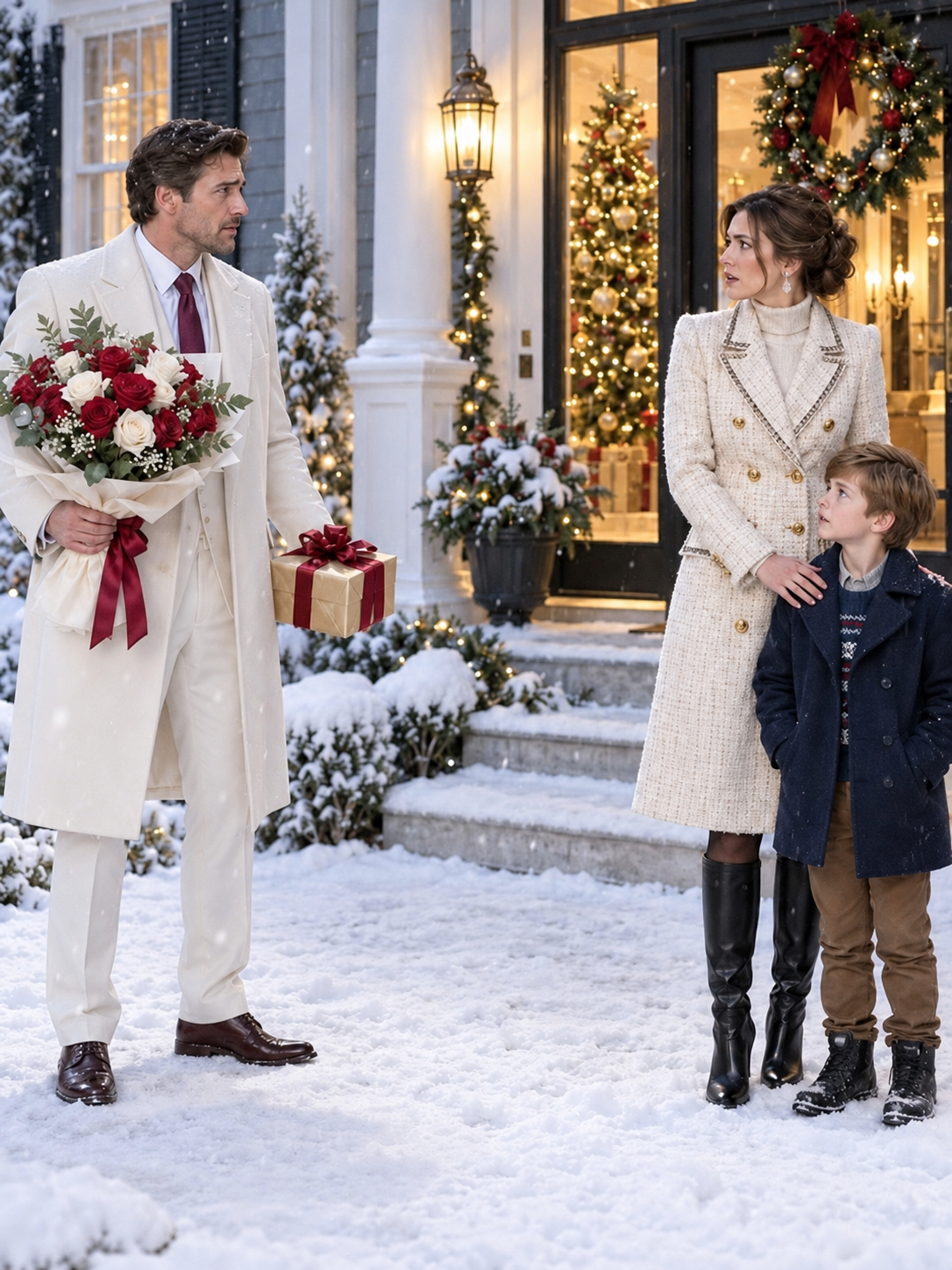
FULL STORY: Seven years after our divorce, I went to my ex-wife’s house on Christmas Eve, hoping to apologize and finally admit I had been wrong about her. 002
Only my sister.
And the wreckage she had made.
Rachel’s eyes darted to me again. For the first time that day, there was something like fear in them. Not guilt. Not regret. Fear of exposure.
“Emily,” she said, and her voice softened into the one she used when she wanted something. “Tell them this is a misunderstanding.”
I looked at her.
Suddenly I was eight years old again, standing in our mother’s kitchen while Rachel cried over a broken vase she had knocked off the shelf. By the time our mother came in, Rachel had tears on her cheeks and my fingerprints on the pieces.
Emily did it.
I was fourteen again, watching Rachel wear my borrowed dress to a school dance after telling me no one wanted me there.
You don’t mind, right?
I was twenty-two again, leaving for my first deployment while she stood at the doorway, rolling her eyes.Try not to come back acting important.
And then I was back in the chapel, wearing the uniform she had once called embarrassing.
“No,” I said. “It is not a misunderstanding.”
Rachel’s mouth fell open.
A sound moved through the guests.
Alexander closed his eyes briefly, as if something inside him had broken cleanly.
The king nodded to a gray-haired man standing near the front.
The man opened a leather folder.
“For the record,” he announced, “the palace investigation began after Miss Rachel Carter introduced herself at a charity reception as a Carter woman with naval distinction. She later submitted a written family profile in which achievements belonging to Commander Emily Carter were presented without correction. When questioned further, she implied that certain details could not be publicly confirmed due to security classification.”
I stared at Rachel.
That was clever.
Ugly, but clever.
She had not needed to forge everything. She had wrapped herself in shadows, half-truths, and implications. Classified work. Confidential files. Family privacy. Words that sounded noble enough to silence questions.
The man continued.
“Only yesterday, palace security received an anonymous packet containing original records, birth certificates, service documentation, and correspondence proving the deception. After verification through military channels, His Majesty ordered Commander Carter to be brought here immediately.”
Anonymous packet?
My pulse shifted.
I looked at the king.
He looked back as though he had expected my confusion.
Then, from somewhere behind me, a familiar voice said, “That would be me.”
The chapel doors were still open.
A woman stood beneath the archway, holding a black handbag against her stomach. Her silver hair had been pinned back neatly, though loose strands framed her tired face. She wore a dark blue dress I recognized from funerals and court hearings and every serious moment of our family history.
My mother.
Rachel made a strangled sound.
“Mom?”
Our mother walked down the aisle slowly. Not proudly. Not dramatically. Just steadily, as though every step cost her something and she had decided to pay it anyway.
I could not move.
For years, my mother had chosen peace over truth. Silence over confrontation. Rachel over everyone else, because Rachel was louder, more fragile, more demanding. I had learned not to expect defense from her.
But now she stopped beside me.
Her hand found mine.
It was trembling.
“I am sorry,” she whispered.
Those three words nearly undid me more than the entire chapel.
Rachel’s face crumpled, but only for a second. Then anger flashed through.
“You sent it?” she demanded. “You ruined my life?”
Our mother turned toward her.
“No, Rachel,” she said. “You built this. I only opened the door before someone else was trapped inside it.”
Alexander looked from one woman to the other.
“You knew?” he asked.
My mother’s eyes filled.
“I suspected for months. She told me the palace admired the Carter family service. Then I saw one of the engagement profiles drafted for foreign press.” She swallowed. “It described my Emily. Not Rachel.”
Rachel shook her head violently.
“I was going to tell him after the wedding.”
A bitter murmur moved through the chapel.
Alexander’s voice dropped.
“After?”
Rachel stepped toward him, hands lifting. “You don’t understand the pressure I was under. Your world judges everything. Bloodlines, accomplishments, education, image. I just needed to be enough.”
“You lied to me,” he said.
“I loved you.”
“You lied to me,” he repeated.
The simplicity of it silenced her.
The king turned to his son.
“Alexander.”
The prince did not look at him.
His eyes remained fixed on Rachel, searching for the woman he thought he knew and finding only the costume she had worn.
“Was any of it true?” he asked her. “Anything?”
Rachel’s voice became desperate.
“My feelings were true.”
“And your name?”
She recoiled.
The question landed harder than expected.
Because that was the center of it. Rachel had not merely lied about medals or missions. She had offered him a version of herself stolen from someone else and asked him to build a marriage on it.
Alexander removed the ring from his hand.
Rachel stared at it.
“No,” she whispered.
He placed it on the altar rail.
The tiny sound it made against the polished wood seemed louder than thunder.
“This ceremony is over,” he said.
Rachel lunged for him, but two guards stepped forward.
They did not touch her at first. They simply appeared between them, immovable.
Her beauty changed then. Not vanished, exactly, but sharpened into something frantic and exposed. She spun toward the guests.
“You’re all enjoying this, aren’t you?” she shouted. “All of you sitting there, pretending you’re better than me. Do you know what it feels like to spend your whole life beside someone everyone praises? Brave Emily. Strong Emily. Perfect Emily.”
My chest tightened.
Perfect.
That word again.
Rachel had used it like a knife for years. She never understood that praise and loneliness could live in the same room. That medals could hang beside nightmares. That strength was not the absence of pain, only the refusal to let it decide your name.
She turned on me.
“You always had something,” she said. “Even when you had nothing, people respected you. I had to fight for every glance.”
“No,” I said quietly. “You demanded every glance. There’s a difference.”
Her eyes burned.
For a moment, I thought she might scream again.
Instead, she smiled.
It was small. Shaking. Dangerous.
“You think this ends with me humiliated?” she asked. “You think I came here with nothing but a dress and a lie?”
The king’s eyes narrowed.
One of the aides stepped closer to him.
Rachel lifted her chin.
“There are contracts already signed. Media rights. Partnership agreements. Charity foundations bearing my future title. Donations pledged in my name. If you destroy me publicly, you destroy half the palace’s reputation with me.”
The room shifted.
That was when I realized Rachel had not been entirely cornered.
She had planned for scandal.
Maybe not this exact one, but something. She had wrapped herself around enough money, enough press, enough public expectation that removing her would not be clean.
The king said nothing.
Rachel saw the pause and fed on it.
“You can end the wedding,” she said. “But by tonight, every headline will ask why the royal family failed its own investigation. Why a prince was fooled. Why a king paraded a bride before the world and then dragged her sister into the chapel like some military prop.”
Alexander’s face hardened.
“Stop.”
But Rachel’s eyes were on the king.
“And I will speak,” she said. “I will cry. I will apologize beautifully. I will say I was overwhelmed, insecure, afraid of not fitting into your impossible world. People love a fallen bride more than a perfect one.”
A chill passed through me.
There she was.
Not the crying girl beside the broken vase.
Not the jealous sister.
Not the frightened bride.
This was Rachel without perfume.
The king regarded her for a long moment.
Then he smiled.
It was not a warm smile.
“My dear,” he said, “you misunderstand the purpose of bringing Commander Carter here.”
Rachel blinked.
He gestured to the man with the folder.
The man removed another document.
“The wedding ceremony was never going to continue,” the king said. “That decision was made before Commander Carter arrived.”
Rachel’s confidence flickered.
“Then why bring her?”
The king’s gaze moved to me.
“Because I owed the truth a witness.”
I did not know what to say.
He continued.
“And because the matter does not end with you.”
The chapel doors closed behind us.
This time, the sound was deliberate.
A lock clicked.
Every camera in the press section went dark at once as security officers moved through the rows collecting recording devices. Guests began speaking in alarm, but palace guards guided them back into their seats with polite firmness.
Rachel’s smile disappeared.
“What is this?” she asked.
The king looked toward the side entrance near the choir stalls.
A man entered wearing a black suit and no expression. Behind him came two more officials carrying sealed cases.
“This,” said the king, “is a criminal inquiry.”
Rachel stumbled back.
“No.”
The black-suited man opened a folder and read from it.
“Miss Rachel Carter, palace security has reason to believe that the deception surrounding your engagement was not limited to false personal claims. Funds donated to the Crown Children’s Medical Trust were redirected through shell accounts connected to a private consulting firm registered under the name Bright Crown Advisory.”
Alexander turned sharply.
Rachel whispered, “I don’t know what that is.”
The man did not look up.
“Bright Crown Advisory was established six weeks after your engagement announcement. Its listed director is Miranda Vale.”
The name meant nothing to me.
But it meant something to Rachel.
Her face went still.
Too still.
Our mother squeezed my hand.
The king noticed.
“As I thought,” he said.
Alexander looked sick.
“Rachel,” he said, “tell me you did not steal from sick children.”
Her eyes flashed.
“I didn’t steal anything.”
The black-suited man continued.
“Three million euros were moved through accounts linked to Ms. Vale. Communications recovered from encrypted messages suggest you were promised a percentage following the wedding, once royal access became permanent.”
“That is a lie,” Rachel said, but her voice had lost its force.
The chapel had become something else now. Not a wedding. Not even a scandal.
A trap.
And Rachel had walked into it wearing diamonds.
The side door opened again.
This time, an older woman entered.
She had copper-red hair, a white suit, and the smooth smile of someone who had never once entered a room without calculating its exits.
Rachel’s entire body stiffened.
“Miranda,” she breathed.
The woman smiled faintly.
“Hello, Rachel.”
Alexander looked between them.
“You know her?”
Rachel said nothing.
Miranda Vale adjusted one pearl earring.
The official beside her spoke.
“Ms. Vale was detained at the airport two hours ago attempting to leave the country. She has agreed to cooperate with investigators.”
Rachel’s jaw clenched.
“You snake.”
Miranda gave a delicate shrug.
“I prefer survivor.”
The king’s voice remained calm.
“Ms. Vale has provided correspondence indicating that she coached you through your entrance into royal society, assisted in shaping your public biography, and arranged financial channels connected to charitable donations.”
Rachel laughed once, harsh and broken.
“You think she’s telling the truth? She would sell her own mother for immunity.”
“Fortunately,” said the official, “she also kept recordings.”
That ended Rachel’s performance.
Her knees seemed to weaken.
For a heartbeat I saw the little sister I had once loved—messy-haired, stubborn, begging me to check under her bed for monsters. I had protected her then. I had protected her more times than she knew.
But this monster was not under the bed.
It was in the mirror.
Two guards approached her.
Rachel looked at me, and for the first time, the anger drained away. Beneath it was panic. Real panic.
“Emily,” she whispered. “Help me.”
The room seemed to tilt.
That was the cruelest thing she could have done.
Because some part of me still remembered teaching her to tie her shoes. Still remembered sharing blankets during thunderstorms. Still remembered promising our father, before he left us for good, that I would look after her.
My mother’s grip tightened.
“She has to answer for this,” she said softly.
I looked at Rachel.
“I can’t save you from what you chose.”Her face hardened instantly, as if regret had only been another mask and I had failed to reward it.
“Then remember this,” she said as the guards took her arms. “You didn’t win. You just stepped into the place I prepared.”
I frowned.
“What does that mean?”
Rachel smiled again.
This time, it was almost peaceful.
Before she could answer, the chapel lights flickered.
Once.
Twice.
Then every screen in the room came alive.
Phones seized by guards lit up in their hands. The black displays near the press section flashed white. A large monitor near the entrance, meant to show wedding footage to overflow guests, filled with a single image.
My military ID photo.
Under it, bold black letters appeared.
COMMANDER EMILY CARTER: THE ROYAL FAMILY’S REAL CHOICE?
A ripple of confusion passed through the chapel.
Then another line typed itself across the screen.
HOW LONG HAS THE PALACE BEEN HIDING HER?
My blood turned cold.
The king snapped, “Shut it down.”
Officials rushed toward the equipment.
But the message had already changed.
Footage appeared.
Me entering the chapel.
Me walking toward the altar.
The king calling my name.
Alexander staring at me.
Edited together, sharpened, framed.
It looked intimate.
Planned.
Like a secret revelation, not an emergency summons.
The headline shifted again.
PRINCE’S BRIDE REMOVED — WAR HERO SISTER STEPS IN.
Rachel began laughing.
Softly at first.
Then louder.
The guards held her, but she did not resist anymore.
Alexander looked at me with horror, not because he believed it, but because he understood what the world would believe by morning.
My uniform, my name, my service, my face—everything Rachel had stolen was now being used again, only this time by some unseen hand.
The king turned to Miranda Vale.
Her smile had vanished.
“I didn’t do that,” she said quickly.
For once, she sounded honest.
The screens went black.
Then one final message appeared.
NOT ALL CROWNS ARE WORN IN PUBLIC.
The chapel doors burst open.
A young palace aide ran inside, pale and breathless.
“Your Majesty,” he said, voice shaking. “The story is already everywhere. Every major outlet. Every social platform. It was scheduled in advance.”
Rachel tilted her head toward me.
“I told you,” she whispered.
But she was looking past me.
Not at Alexander.
Not at the king.
At someone seated quietly in the last row.
I turned.
A man I did not recognize rose from among the guests.
He was dressed like a minor diplomat, forgettable in a dark suit, with a silver tie and a calm, pleasant face. He gave Rachel the smallest nod.
Then he looked directly at me.
And smiled like he had been waiting for me much longer than she had.
The guards moved toward him, but the chapel plunged into darkness before they reached his row.
Someone screamed.
A door slammed.
When the emergency lights came on seconds later, the man was gone.
And on the altar, beside Alexander’s abandoned wedding ring, lay a small white card.
I picked it up before anyone could stop me.
Only one sentence was written on it.
Welcome to the real inheritance, Commander Carter. PART 3: THE HOSPITAL TRAP
**The moment I saw Daniel’s unconscious body in that photo, something inside me stopped being afraid.**
Detective Miles grabbed my wrist before I could move.
“Eleanor, listen to me,” he said. “That message was designed to pull you out alone.”
“My son is in that bed.”
“And Richard said he’s already inside the hospital.”
I stared at the black screen, my breath shaking. **Twelve years ago, I lost my husband to a lie. Tonight, I was not going to lose my son to another one.**
Miles pulled a backup battery from his coat and connected it to the computer. The screen flickered back to life just long enough for him to copy the files.
Then the hallway outside creaked.
Miles raised his gun.
A voice came from the darkness.
“Ellie?”
My heart collapsed.
Richard stepped into the doorway, older, thinner, soaked from the rain, but alive.
**My dead husband was standing ten feet away from me.**
PART 4: THE DEAD MAN RETURNS
For a second, I forgot Thomas, Marissa, Daniel, the flash drive—everything.
I could only stare at Richard’s face.
“You let me bury you,” I whispered.
His eyes filled with pain. “I watched from across the lake.”
The words struck harder than any confession.
“You watched me grieve?”
“I watched because I was told if I came near you, Daniel would die.”
Miles lowered his gun slightly. “Richard, where’s the scarred man?”
“At the hospital,” Richard said. “But he isn’t there for Daniel.”
I froze. “Then who?”
Richard looked at me.
“You.”
He stepped closer. “Thomas doesn’t want the flash drive anymore. He wants you to destroy it willingly. He knows you’re the only person Daniel trusted enough to finish this.”
I shook my head. “Why would my own brother do this?”
Richard’s voice broke. “Because Thomas was never protecting the family business. **He was the family business.**”
PART 5: THE BROTHER BEHIND THE BLOOD
We reached the hospital through a service entrance Richard remembered from years of hiding and watching.
Daniel’s floor was too quiet.
No nurses at the station.
No police officer outside his room.
Miles whispered, “This is wrong.”
Then we heard Thomas.
“My poor sister,” he said from Daniel’s room. “Always running after ghosts.”
We stepped inside.
Thomas stood beside Daniel’s bed in a dark coat, calm as a priest at a funeral. Marissa stood near the window, her face pale, one hand bandaged, her eyes wild with exhaustion.
Beside her was the man with the scar.
Thomas smiled at me.
“Ellie,” he said softly. “You always did need men to explain danger to you.”
I looked at my brother—the man who had carried groceries into my house, fixed my porch light, held me when I cried.
“You killed my life,” I whispered.
Thomas tilted his head. “No. I improved it. Richard was going to ruin everything.”
Richard stepped out of the shadows.
Thomas’s smile died.
PART 6: MARISSA’S LAST LIE
Marissa stared at Richard as if a corpse had opened its eyes.
“You said he was dead,” she hissed at Thomas.
Thomas’s face hardened. “You were paid to marry Daniel, not ask questions.”
I turned to her. “You stabbed my son.”
Her lips trembled. “No. I was supposed to scare him. Victor stabbed him when Daniel fought back.”
The scarred man reached for his weapon.
Miles fired first.
The shot shattered the window behind Victor. He fell against the wall, screaming, his gun sliding across the floor.
Marissa dropped to her knees.
“I didn’t know they were going to kill him,” she sobbed. “Thomas said Daniel only had files. He said no one would get hurt.”
Daniel stirred on the bed.
His eyes opened barely.
“Mom,” he breathed.
I ran to him, tears flooding my face.
“I’m here,” I whispered. “I’m here.”
Daniel’s fingers moved weakly toward the monitor beside his bed.
Miles looked at the screen.
A red recording light blinked.
**Daniel had recorded everything.**
PART 7: THE TRUTH THAT BURIED THOMAS
Thomas lunged for the machine, but Richard tackled him with a force I had never seen in him before.FULL STORY: My children sat on my parents’ living room floor holding a dollar-store game and a cheap snowman mug 002
PART 2: My children sat on my parents’ living room floor holding a dollar-store game and a cheap snowman mug 002
FULL STORY: Seven years after our divorce, I went to my ex-wife’s house on Christmas Eve, hoping to apologize and finally admit I had been wrong about her. 002
“You took my son,” Richard growled.
Thomas spat blood and laughed. “No, Richard. I kept him useful.”
I stood beside Daniel, my hand on his shoulder, and for the first time in twelve years, I did not tremble.
Police thundered down the hallway.
Miles had called them before we entered.
Thomas was dragged to his feet, still smiling.
“You think this ends with me?” he said.
Miles held up the flash drive.
“No,” he replied. “It starts with you.”
Marissa began naming accounts, safe houses, false companies, judges, officers, every hidden tunnel Thomas had built beneath our lives.
By morning, half the city was burning with arrests.
And when the sun rose, Richard sat beside Daniel’s bed and cried.
Not like a hero.
Like a father who had lost too many years.
PART 8: THE WOMAN THEY COULD NOT BREAK
Three months later, Daniel walked again.
Slowly.
Painfully.
But alive.
Marissa took a deal and testified. Victor survived long enough to confess that Thomas had ordered Richard’s fake death, Daniel’s surveillance, and the final hospital trap.
Thomas went to prison without once apologizing.
On the day of sentencing, he looked at me across the courtroom and said, “You were supposed to stay weak.”
I smiled.
“That was your mistake.”
Richard did not move back into my house.
Some wounds do not close just because the truth finally arrives.
But every Sunday, he came for dinner. Daniel sat between us, still healing, still angry, still alive. And slowly, the silence at our table became something softer.
One evening, Richard handed me an old silver key.
“What is this?” I asked.
He smiled sadly. “The lake house. I bought it back years ago.”
I stared at him.
Daniel leaned forward. “Mom, there’s something else.”
We drove there at sunset.
Inside the house, behind the fireplace, Richard had hidden boxes of letters—hundreds of them.
Every birthday.
Every anniversary.
Every Christmas.
Letters he had written but never sent.
At the bottom was one addressed to me.
Ellie, if I ever come home, I won’t ask you to forgive me. I’ll only ask for the chance to spend the rest of my life earning the right to sit beside you again.
I folded the letter against my chest.
Outside, the lake glittered gold.
For twelve years, I had believed that water had swallowed my husband.
But it had not swallowed me.
It had not swallowed Daniel.
It had not swallowed the truth.
**They buried a man who was still alive.**
**They underestimated a mother who had nothing left to lose.**
And in the end, the family they tried to destroy became the one thing they could never kill.
PART 8: THE LETTERS UNDER THE LAKE HOUSE
The lake house had not changed as much as I expected.
The porch still leaned slightly to the left, as if the old wood had been listening to too many storms. The windows still caught the sunset in long strips of gold. The same maple tree stood near the steps, its branches bare in the winter air, scratching softly against the sky like fingers trying to write an apology.
For twelve years, I had refused to come back here.
This was the place where Richard had supposedly vanished.
This was the place where grief had first put its hand around my throat and told me I would never breathe the same way again.
Now Richard stood beside me on the porch, alive, older, quieter, waiting for permission to enter a home that had once been his.
Daniel limped up the steps behind us, one hand pressed lightly against his ribs.
“You okay?” I asked.
He gave me a small smile. “I’ve survived worse than stairs.”
The joke was weak, but it made my eyes burn.
Richard unlocked the door.
The smell of dust, cedar, and old lake air rushed out.
For a moment, none of us moved.
Then Richard stepped aside and looked at me.
“You first,” he said.
I walked in slowly.
The living room was almost empty, but not abandoned. Someone had protected this place. White sheets covered the furniture. The fireplace was clean. A single framed photograph sat on the mantel—me, Richard, and Daniel on a summer afternoon, all three of us laughing, frozen in a life before betrayal learned our address.
I picked up the frame.
My fingers trembled over Daniel’s younger face.
“You kept this?” I whispered.
Richard nodded. “It was the only picture I took with me.”
Daniel looked away, jaw tight.
Richard saw it. “I know that doesn’t fix anything.”
“No,” Daniel said quietly. “It doesn’t.”
The room went still.
Then Daniel turned back to him.
“But it means something.”
Richard swallowed hard.
I had watched my son hate his father for disappearing. I had watched him hate himself for missing him. Now I watched something even harder begin inside him—the slow, painful struggle to allow love and anger to sit in the same room.
Richard crossed to the fireplace and knelt.
“There’s a loose stone here,” he said.
He pressed his palm against a dark brick near the bottom. It shifted inward with a dull click.
Daniel stared. “You built a secret compartment in our fireplace?”
Richard looked almost embarrassed. “Your mother wanted a normal house. I was already working with dangerous men.”“That’s not funny,” I said.
“I know.”
He reached inside and pulled out the first box.
Then another.
Eight boxes in total.
Each one tied with string.
Each one labeled in Richard’s handwriting.
DANIEL — BIRTHDAYS.
ELLIE — ANNIVERSARIES.
CHRISTMAS.
UNSENT.
THE TRUTH.
Daniel sat slowly on the covered sofa, staring at them as if they were graves.
Richard opened the first box.
Inside were envelopes. Dozens of them.
Daniel picked one up.
The front read: Daniel, age 22.
His hands shook.
“That was the year after you disappeared,” he said.
Richard’s voice was rough. “Open it.”
Daniel did.
He read silently at first.
Then his face changed.
I watched the anger in him crack—not vanish, not forgive, not heal all at once—but crack just enough for something else to enter.
He read aloud.
“Son, today you are twenty-two. I don’t know if you still fish from the dock when you’re angry. I don’t know if you still tap your pencil three times before signing your name. I don’t know if you still pretend not to care when you care too much. But I know this: wherever I am, whatever they call me, I am still your father.”
Daniel stopped.
His mouth tightened.
Richard looked down.
“I wrote one every year,” he said. “Even when I thought I would die before anyone found them.”
Daniel’s eyes were wet now, but his voice stayed hard. “Why didn’t you send them?”
“Because every channel was watched. Every contact point. I tried once.”
Richard reached into the box marked THE TRUTH and pulled out a torn envelope sealed inside a plastic bag.
“This letter was intercepted. Two days later, a man followed your mother home from work. Thomas sent me proof. He said next time, he would send proof of something worse.”
I stared at him.
“You never told me.”
Richard met my eyes. “Every choice I made was wrong in one way and right in another. I don’t expect you to understand.”
“I understand too much,” I said softly. “That’s the problem.”
Daniel folded the letter carefully and pressed it against his knee.
“Did you know about Marissa from the beginning?” he asked.
Richard closed his eyes.
“No. Not at first. By the time I learned, you were already married. If I warned you without proof, Thomas would have moved faster.”
Daniel laughed bitterly. “So you watched me sleep beside a spy?”
“I watched my son smile at a woman I knew might destroy him,” Richard said, his voice breaking. “And every day I hated myself for staying hidden.”
Daniel stood too quickly and winced.
I reached for him, but he held up a hand.
“Don’t,” he whispered.
Then he looked at Richard.
“You don’t get forgiveness today.”
Richard nodded. “I know.”
“You don’t get to walk back in and be Dad again because you wrote letters.”
“I know.”
Daniel’s eyes overflowed.
“But I needed you,” he said. “I needed you when I married her. I needed you when Mom cried herself sick. I needed you when I started thinking something was wrong and everyone told me I was paranoid.”
Richard’s face crumpled.
“I know,” he whispered.
Daniel took one unsteady step toward him.
Then another.
For a terrible second, I thought he might hit him.
Instead, Daniel collapsed against his father’s chest.
Richard caught him like a man catching the only life he had left.
Daniel sobbed once.
Only once.
But it was the sound of twelve years breaking open.
Richard held him and cried silently into his son’s hair.
I turned away because some moments are too sacred to watch directly.
Outside, the lake moved softly against the shore.
That night, we stayed in the house.
Not because everything was healed.
Because running had stolen enough from us.
Richard built a fire. Daniel fell asleep on the couch with a letter still in his hand. I sat at the kitchen table while Richard made coffee the way he used to—too strong, too black, too late at night.
He placed a mug in front of me.
I did not touch it.
He sat across from me.
For a long time, we said nothing.
Then I asked, “Did you ever stop loving me?”
His answer came immediately.
“No.”
I looked out the window.
The dark lake reflected the moon in broken pieces.
“I tried to hate you,” I said.
“You should have.”
“I did, some days.”
“I know.”
“No, Richard. You don’t know.” I turned back to him. “You died, and I had to keep living. I had to answer Daniel’s questions. I had to sit at holidays with an empty chair. I had to sign forms, sell things, comfort people who kept telling me time would help.”
My voice cracked.
“Time didn’t help. It only made the lie older.”
Richard stared at his hands.
“I watched you from a distance sometimes,” he said.
The confession landed between us.
I stiffened.
“When?”
“Not often. Not close. Once outside the grocery store. Once at Daniel’s college graduation. Once when you got sick and Thomas took you to the clinic.”
I closed my eyes.
“You were there?”
“Yes.”
“And you still didn’t come?”
“I almost did.”
“But you didn’t.”
“No.”
I stood and walked to the sink, gripping the counter until my knuckles went white.
Behind me, Richard said, “Ellie, I was a coward in the ways that mattered most.”
That made me turn.
Not because it excused him.
Because it was the first honest sentence that did not ask me to understand.
“I don’t know what we are now,” I said.
He nodded. “Neither do I.”
“I don’t know if I can love you the way I did.”
“I wouldn’t ask you to.”
“But I don’t know how to stop either.”
His eyes filled again.
I hated him for that.
I loved him for that.
I hated that both could be true.
He whispered, “Then let me earn whatever remains.”
The next morning, Daniel found the final box.
It had been tucked behind the others, smaller, wrapped in oilcloth.
No label.
Inside was a photograph of Marissa as a teenager.
Not glamorous.
Not cold.
Just young. Frightened. Standing beside Thomas outside a courthouse.
Under the photo was a file.
Richard read it first.
His face darkened.
“What is it?” Daniel asked.
Richard handed it to him.
Daniel scanned the pages.
Then all the color drained from his face.
Marissa had not simply been paid.
She had been trapped.
Her father had owed money to Thomas’s network. When he disappeared, Thomas used the debt to control her mother. Marissa was seventeen when Thomas first approached her. Nineteen when he trained her. Twenty-three when he placed her in Daniel’s life.
Daniel sat down slowly.
“She chose it,” he said, but his voice was weaker now.
Richard nodded. “Yes. But she was also made.”
I thought of Marissa sobbing in the hospital. I thought of the blood on her hands. I thought of Daniel on the stretcher.
Compassion came, but it came with teeth.
“She still hurt you,” I said.
Daniel nodded. “I know.”
Three weeks later, Daniel asked to see her.
I argued.
Richard argued.
Miles argued.
Daniel listened to all of us, then said, “I don’t want her back. I want the truth from her mouth without Thomas standing behind it.”
So we went to the county detention center.
Marissa entered the room wearing gray, her hair tied back, her face bare and smaller than I remembered.
When she saw Daniel, she began to cry.
He did not.
“You loved me?” he asked.
She pressed both hands to her mouth.
Then she nodded.
“Yes.”
He leaned forward. “When?”
Her tears fell harder.
“Too late.”
Daniel’s face tightened.
“I need a better answer.”
Marissa forced herself to breathe.
“At first, you were an assignment. Then you were kind. Then you were home. And by the time I realized I loved you, I had already lied so much that telling the truth would have destroyed everything.”
Daniel stared at her.
“You destroyed everything anyway.”
“I know.”
“You let me think I was crazy.”
“I know.”
“You watched my mother grieve while you knew my father might be alive.”
Marissa shook her head. “I didn’t know he was alive until much later. Thomas told me he was dead. When I found out, I tried to leave.”
“Victor stabbed me because you tried to leave?”
She nodded.
“I told Thomas I was done. I told him I wouldn’t help anymore. Daniel, that night at the house, I was going to tell you everything. Then Victor came. He said if I confessed, he would kill you and make it look like I did it.”
Daniel looked away.
For the first time, I saw something in him soften—not love, not forgiveness, but the terrible mercy of understanding how evil spreads through fear.
Marissa whispered, “I don’t deserve your forgiveness.”
“No,” Daniel said.
Her face collapsed.
“But I hope one day you become someone who would.”
That was all he gave her.
And somehow, it was enough.
Months passed.
The arrests became headlines. The headlines became documentaries. Strangers called us brave. Reporters knocked on my door. People wanted the story neat, simple, satisfying.
They wanted villains in handcuffs and heroes in sunlight.
But real healing was quieter.
It was Daniel learning to sleep without checking the locks three times.
It was Richard asking before hugging him.
It was me waking from dreams where the lake swallowed everything, then remembering the truth had already surfaced.
It was Sunday dinners where nobody pretended.
On the first anniversary of Thomas’s arrest, we returned to the lake house again.
This time, Daniel brought flowers.
Not for Thomas.
Not for Marissa.
For the family we had been before all this began.
He placed them on the dock.
Richard stood beside him.
I stood behind them both.
Daniel said, “I used to think this lake took Dad.”
Richard’s voice was low. “It took a lot from us.”
Daniel turned to him.
“But not everything.”
The sun was setting.
The water glowed like fire and glass.
Richard reached into his coat and pulled out one last envelope.
He handed it to me.
“What is this?” I asked.
“The only letter I wrote after coming home.”
I opened it.
Ellie,
I spent twelve years believing survival was the same thing as love. I was wrong. Love is not hiding in the dark to protect someone from a bullet. Love is standing beside them in the light afterward and accepting whatever judgment they give you.
You owe me nothing.
But if there is one morning left in your heart where I may sit across from you, drink terrible coffee, and hear you complain about how badly I make toast, I will spend the rest of my life grateful for it.
I folded the letter.
Richard waited, silent.
I looked at him—at the gray in his beard, the guilt in his eyes, the man I had mourned and hated and missed.
Then I took his hand.
Not as a promise that everything was repaired.
Not as permission to erase the past.
But as proof that I was still alive enough to choose what came next.
Daniel saw our hands and smiled.
For the first time in years, the smile reached his eyes.
Behind us, the lake whispered against the dock.
It no longer sounded like a grave.


0 Comment:
Enregistrer un commentaire